
Table of Contents
- The Deadline That Isn’t Moving Again
- The Calendar Math Most Organizations Get Wrong
- Why the Real Constraint Is People, Not Budget
- Who Is Most Exposed Right Now
- Your Four Realistic Paths Forward
- Building a Timeline That Survives Contact with Reality
- The Timing Mistakes That Cost the Most
- Checklist: How Exposed Is Your Organization?
- FAQ
- Regard d’Expert
- Références
The Deadline That Isn’t Moving Again
SAP has confirmed, without the hedging language that accompanied previous cycles, that mainstream maintenance for SAP ECC 6.0 (Enhancement Packages 6 through 8) ends on December 31, 2027. Organizations have watched SAP shift deadlines before — from 2020, to 2025, to 2027 — and many are quietly betting on one more extension. That bet is getting riskier every quarter, and even if it pays off, the underlying problem it’s postponing doesn’t go away: an aging ERP core that increasingly can’t support the business running on top of it.
The Calendar Math Most Organizations Get Wrong
A typical SAP S/4HANA migration takes 12 to 36 months, depending on landscape complexity and the degree of custom code accumulated over years on ECC. That math alone should concentrate minds. But the more dangerous miscalculation is treating the 2027 date as the point by which you need to start, rather than the point by which you need to be done. An organization beginning its program in mid-2026 has fewer than 18 months to the deadline — a timeline that only works with an unusually clean landscape, a highly disciplined program, or a willingness to fall back on extended maintenance as a bridge.

December 31, 2027 is now a firm date, not a working assumption.
Why the Real Constraint Is People, Not Budget
Budget is rarely the binding constraint on an S/4HANA migration. Qualified delivery capacity is. With more than 60% of ECC customers yet to start their migration, and typical programs running 12 to 36 months, the market for certified S/4HANA consultants, systems integrators, and hyperscaler migration capacity will tighten sharply as 2027 approaches. Multiple industry analysts project day rates rising 10 to 20% in the final stretch, with demand for qualified talent potentially outstripping supply by a significant multiple. Organizations that secure their implementation partner and core program team early are not just being cautious — they are locking in cost and quality before the market repriced against latecomers.
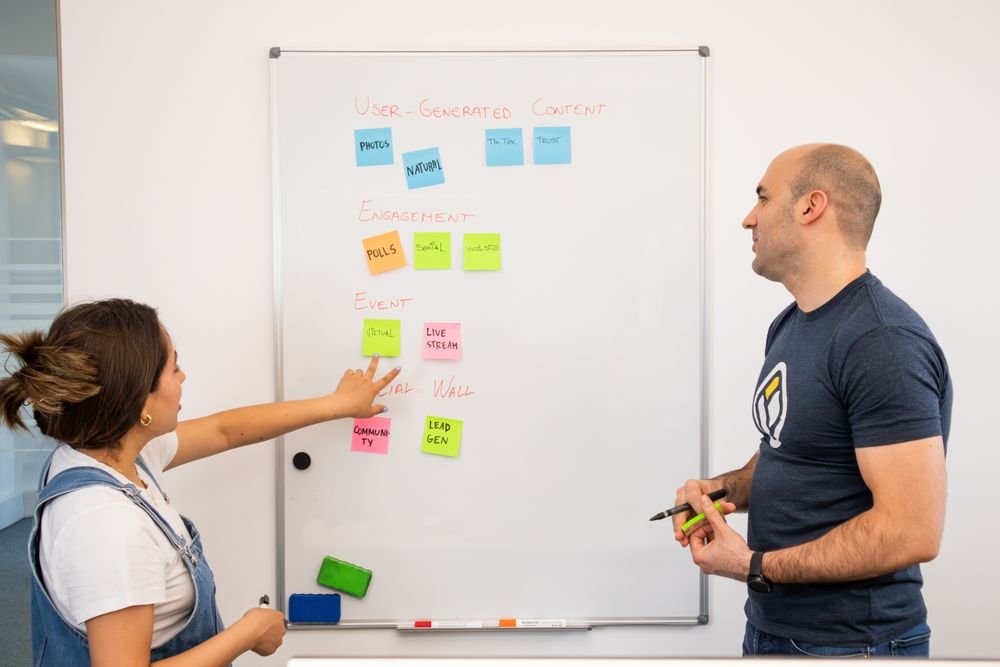
Securing skilled delivery teams early is a cost decision, not just a scheduling one.
Who Is Most Exposed Right Now
- Organizations still on ECC EHP 0-5 — mainstream maintenance for these versions already ended in late 2025; you are already in customer-specific maintenance territory.
- Regulated industries (financial services, healthcare, energy) — the operational risk of unpatched, non-compliant systems carries direct regulatory exposure, not just an inconvenience.
- Organizations with heavily customized ECC landscapes — custom code remediation adds meaningfully to migration timelines and is often underestimated in early planning.
- Any organization that hasn’t run a formal options assessment — without one, there is no credible basis for a board-level decision, and every month of delay compounds the capacity problem above.
Your Four Realistic Paths Forward
Greenfield — a clean S/4HANA implementation, rebuilding processes around SAP best practices. Typically 12-18 months, best suited to organizations willing to redesign rather than replicate existing processes.
Brownfield — a technical conversion retaining historical data and existing configuration. Faster (6-12 months) and preferred by organizations with heavy, valuable customization they don’t want to lose.
RISE with SAP / Extended Maintenance — a bridge, not a destination. Buys time (to 2030) at a premium (roughly 9% above standard maintenance fees), without new capabilities or the same pace of regulatory updates.
Selective / Bluefield — a hybrid, migrating selected data and processes into a new S/4HANA environment. A middle path for organizations with mixed landscape complexity.
Building a Timeline That Survives Contact with Reality
A credible timeline starting today typically includes: a formal landscape and gap assessment (6-8 weeks minimum for something a board will trust), a structured RFP comparing all four paths above with real vendor proposals in H2 2026, partner and core team selection before the resourcing crunch intensifies in late 2026, and execution across the following 12-36 months depending on scope. Every additional month of delay compresses this sequence further, and compression is exactly where migration risk concentrates.
The Timing Mistakes That Cost the Most
- Betting on another SAP deadline extension that may not materialize this time.
- Treating this as an IT compliance project rather than a board-level business continuity decision.
- Starting the RFP process after mid-2026, once resourcing tension already works against you.
- Signing an extended maintenance or RISE with SAP contract without an independent, comparative benchmark.
Checklist: How Exposed Is Your Organization?
- Do you have a current, formal assessment of your ECC landscape and its migration complexity?
- Has a comparative RFP (migration vs. RISE vs. extended maintenance vs. third-party support) been run with real commercial proposals?
- Is an implementation partner already identified and engaged, ahead of the late-2026 resourcing crunch?
- Has this been framed at board level as a business continuity issue, not solely an IT one?
FAQ
Will SAP extend the 2027 deadline again?
Nothing guarantees it, and building a strategy on that bet is risky. SAP’s language on this specific deadline has been notably firmer than in previous cycles.
What actually happens on January 1, 2028 if nothing has changed?
The system keeps running — SAP cannot remotely disable it — but standard corrections, regulatory updates, and full support SLAs stop unless extended maintenance has been purchased.
Is Brownfield always faster than Greenfield?
Generally yes, but Brownfield carries forward existing technical debt and customization complexity that a Greenfield rebuild leaves behind — faster isn’t always the same as lower total lifecycle cost.
Should we just sign RISE with SAP now to remove the pressure?
Only after a genuine comparative evaluation. Multiple independent analysts note that SAP has commercial incentive to use this deadline as leverage — review terms independently before committing.
Regard d’Expert
Having led ERP replacement studies and multi-country transformation programs, I see the same pattern repeat: organizations that start early keep control of timeline, budget, and partner selection. Organizations that wait end up losing control of all three simultaneously. The question by this point isn’t whether to migrate — it’s on what terms, and how much negotiating room is left.
I’m currently available to support an SAP S/4HANA migration assessment or delivery program, in France or internationally. My experience spans SAP S/4HANA, Microsoft Business Central, and multi-country ERP/MDM transformation programs.
👉 Contact Notoriti to assess your exposure and build a realistic timeline.
A successful SAP migration rarely comes down to the software alone. Diagnoz® helps objectify organizational maturity — governance, data, team adoption — before launching a major ERP project. Discover Diagnoz® →
Références
- SAP, official communications on SAP ECC 6.0 mainstream maintenance end dates, 2026
- SAVIC Technologies, SAP ECC 2027: 60%+ of Companies Haven’t Started Migration, April 2026
- SAP Licensing Experts, SAP ECC End of Maintenance 2027: Migration Options, Licensing Risks, March 2026
- Cogent, SAP Modernization in 2026: The End of Legacy ERP as We Know It, January 2026