
Every multinational group I’ve worked with eventually asks the same question, usually after a failed integration or a painful audit: why does something as simple as « who is our customer » require three meetings, two data exports, and a translator?
The answer is rarely technology. It’s architecture — or more precisely, the absence of one that was ever designed to span borders. Most groups grew their systems the way they grew their business: country by country, acquisition by acquisition, each entity solving its own problem with whatever ERP, CRM or spreadsheet was available at the time. A decade later, the group has a dozen definitions of « active customer, » three incompatible chart of accounts, and a headquarters that genuinely doesn’t know what’s happening on the ground.
This article is for CIOs, transformation directors and program leaders in multinational organizations who are trying to bring order to this landscape — without triggering a rebellion from the very entities whose cooperation they need.
Table of Contents
- Why fragmentation is the default state of multinational groups
- Enterprise architecture: positioning ERP, CRM and data governance across entities
- The business case: what fragmentation actually costs a global organization
- The human dimension: headquarters, subsidiaries and the politics of standardization
- Technical expertise: architecting a multi-country data and systems backbone
- Program methodology: how to sequence a multi-country transformation
- Cross-border complexity: regulation, culture and time zones
- Why these programs fail
- Executive recommendations
- Conclusion
1. Why fragmentation is the default state of multinational groups

No multinational group sets out to build a fragmented system landscape. It happens by accumulation. A subsidiary is acquired with its own ERP already in place. A regional office rolls out its own CRM because headquarters took two years to decide on a group-wide tool. A finance team in one country builds a parallel reporting process because the official one doesn’t capture a local regulatory requirement.
Each of these decisions made sense locally, at the time. The cumulative result, ten or fifteen years later, is a landscape where no single system holds a reliable, complete view of the group’s customers, products or financial position. Headquarters ends up managing the business through a patchwork of manual consolidations, Excel reconciliations and quarterly scrambles to produce numbers that different entities can agree on.
👉 The starting point for any serious multinational transformation is accepting this reality rather than fighting it: fragmentation is not a failure of discipline, it is the natural outcome of growth without a deliberate architecture. The fix has to be architectural, not cosmetic.
2. Enterprise architecture: positioning ERP, CRM and data governance across entities
Bringing coherence to a multinational landscape means deciding, deliberately, what belongs at group level and what stays local — across three layers that show up in every program I’ve been involved in.
ERP and financial consolidation. Whether the group standardizes on Microsoft Dynamics 365, SAP S/4HANA, or a hybrid model with a common consolidation layer over local ERPs, the goal is the same: a chart of accounts and a data model that every entity maps into, even if local instances retain some flexibility for statutory reporting.
CRM and customer data. A multinational CRM rollout is rarely just a software deployment — it is a negotiation over what « customer, » « lead, » and « opportunity » mean across markets with different sales motions, different regulatory constraints on personal data, and different levels of digital maturity.
Master data governance. Underneath both, a Master Data Management discipline — covering customer, product and vendor records — is what actually makes group-level reporting possible. Without it, every consolidation exercise starts from scratch, reconciling definitions rather than analyzing performance.
The BI layer. Group-wide dashboards, the kind we cover in Power BI & Architecture Décisionnelle, are only as reliable as the governance underneath them — a principle that applies identically whether you’re consolidating three countries or thirty.
👉 The recurring mistake is treating each of these layers as a separate project, run by separate teams, on separate timelines — when in reality they need a shared governance model from day one, or they will contradict each other within the first year.
3. The business case: what fragmentation actually costs a global organization
For an executive committee, fragmented systems are not an abstract IT concern. They show up as very concrete costs.
Slow, unreliable consolidation. When each entity reports through a different system with different definitions, month-end and quarter-end close becomes a manual reconciliation exercise, and executives make decisions on numbers that are already weeks old and partially reconciled by hand.
Missed cross-selling and pricing opportunities. Without a shared view of customers and products, the group cannot easily identify a client active in multiple countries, or apply consistent pricing logic across markets — leaving real revenue on the table.
Compliance exposure. Multinational groups face overlapping regulatory regimes — GDPR in Europe, sector-specific rules elsewhere — and fragmented data makes it nearly impossible to demonstrate compliance consistently across entities.
M&A integration cost. Every acquisition inherits the same fragmentation problem, and without an existing architecture to integrate into, each deal adds years to full integration rather than months.
👉 The business case for enterprise architecture in a multinational group is rarely about cutting IT costs. It’s about the speed and reliability with which the organization can actually run itself.
4. The human dimension: headquarters, subsidiaries and the politics of standardization

No multinational transformation succeeds on architecture alone. This is where most programs actually get stuck.
Subsidiaries defend their autonomy for good reasons. A local finance or sales team that built its own process usually did so to solve a real local problem — a regulatory requirement, a market practice, a customer expectation that a generic group template doesn’t address. Dismissing this as « resistance to change » misses the point entirely.
Headquarters underestimates the adoption cost. A data model designed centrally, however elegant, fails if local teams were not involved in shaping it — they will find workarounds, and the fragmentation quietly returns within a year or two.
Time zones and culture shape governance rhythms. A steering committee that works well for a European-only group breaks down the moment it needs to include stakeholders across very different time zones and decision-making cultures — some markets expect rapid, informal decisions; others expect extensive documentation and sign-off.
👉 The role of a Product Owner or program lead in this context is not to enforce uniformity. It’s to negotiate a non-negotiable group-level core — identifiers, compliance rules, reporting standards — while leaving explicit, legitimate room for local adaptation elsewhere.
5. Technical expertise: architecting a multi-country data and systems backbone
Once governance is in place, the technical architecture rests on a few consistent principles.
A single source of truth per data domain. Customer, product and vendor master data each need one authoritative system of record, with all other systems consuming from it rather than maintaining parallel copies.
API-based integration over point-to-point interfaces. Multinational landscapes accumulate integrations faster than any team can document them; a proper API layer keeps this complexity manageable as new entities or systems join.
Localization without fragmentation. The architecture must support country-specific requirements — tax rules, languages, statutory reporting — as configuration on top of a shared core, not as forked, divergent instances of the core itself.
Data residency and sovereignty. Cross-border data flows increasingly run into regulatory constraints on where data can be stored and processed — an architectural decision that has to be made explicitly, not discovered during an audit.
Continuous data quality monitoring. Group-level KPIs on data completeness, consistency and freshness need to be tracked on an ongoing basis, not audited once a year when someone finally asks why the numbers don’t match.
👉 This is the same governance discipline we describe in Gouvernance des Données à l’Ère de l’IA Agentique, applied at the scale of a multinational organization rather than a single entity.
6. Program methodology: how to sequence a multi-country transformation

The programs that succeed follow a deliberate sequence rather than attempting a simultaneous, group-wide rollout.
Assessment across entities. Map existing systems, data quality, and process maturity entity by entity — this consistently reveals a wider gap between headquarters’ assumptions and ground truth than expected.
Co-design the group-level core with local representatives. Bring representatives from a representative sample of entities — not just the largest ones — into the design of the shared data model and governance rules from the outset.
Pilot in two or three entities, not all at once. Choose entities that represent different levels of maturity and different regulatory contexts, and prove the model works before generalizing.
Agile delivery with a real product backlog. Treat the multi-country rollout as a product, with WSJF or MoSCoW prioritization, sprints, and clear Definition of Done criteria per entity — rather than a single big-bang cutover.
Wave-based rollout. Sequence remaining entities into waves based on complexity and readiness, with lessons from each wave feeding into the next.
👉 The single most common planning mistake is underestimating the calendar time needed for the co-design phase — skipping it to « save time » almost always costs more time later, in the form of resistance and rework.
7. Cross-border complexity: regulation, culture and time zones

Once a program spans multiple countries, several categories of complexity compound each other.
Regulatory divergence. GDPR in the EU, sector-specific regulation elsewhere, and data residency requirements that vary by jurisdiction all constrain what a shared architecture can centralize.
Uneven digital maturity. Some entities already operate on modern, cloud-based systems; others still run on legacy platforms or manual processes — the program has to accommodate both without forcing an unrealistic pace on the least mature entities.
Time zone and language friction. Governance rituals designed for a single-region group simply do not scale to a program spanning North America, Europe and Asia without deliberate redesign — rotating meeting times, asynchronous decision processes, and translated documentation become necessary, not optional.
Cultural expectations around hierarchy and decision-making. What counts as sufficient sign-off, and who is expected to make which decisions, varies significantly across corporate cultures — a governance model that ignores this will either move too slowly in some markets or feel imposed in others.
👉 Leading this kind of program requires a different leadership style than a domestic transformation: less directive, more federative, comfortable making decisions with incomplete alignment rather than waiting for global consensus that may never arrive.
8. Why these programs fail
The recurring causes of failure are strikingly consistent across industries and geographies.
No clear data ownership at group level. Without an explicitly designated owner for each data domain, quality issues are everyone’s problem and therefore no one’s responsibility.
Governance designed without local input. A model built entirely at headquarters and then « rolled out » to entities generates passive resistance that surfaces months later as silent non-adoption.
Underestimated data quality debt. Legacy systems accumulate years of inconsistent, duplicated or incomplete records that only become visible once a genuine consolidation is attempted.
One-size-fits-all timelines. Forcing entities with very different starting points onto the same rollout schedule guarantees that some will cut corners to keep pace, reintroducing the fragmentation the program was meant to solve.
Absence of ongoing governance post-launch. Without a standing data governance function — not a one-time project team — the shared model degrades within a year or two as new local exceptions accumulate.
👉 None of these causes are unique to any single industry. They are structural risks of scale and distance, which is precisely why they can be anticipated rather than discovered.
9. Executive recommendations
Name data owners at group level before you start. Do not launch a multi-country program without having settled who is accountable for each data domain — even if that decision is politically uncomfortable.
Co-design with entities, not for them. Involve a representative sample of subsidiaries in shaping the shared model from the beginning, not as a validation step at the end.
Separate the non-negotiable core from legitimate local adaptation. Communicate clearly what must be standardized and what can flex by market — ambiguity here is what fuels resistance.
Sequence by wave, not by big bang. Prove the model on a representative pilot before generalizing, and let each wave inform the next.
Invest in a permanent governance function. A steering committee and a set of data stewards need to outlive the initial program, not disband at go-live.
Choose program leadership for federative skill, not just technical depth. The ability to align stakeholders across cultures and time zones matters as much as architectural expertise in this kind of program.
10. Conclusion
Multinational groups do not fail at enterprise architecture because the technology is hard. Modern ERP, CRM and data platforms are more capable than ever of supporting a multi-country operating model. They fail because governance, human alignment and architecture are treated as separate problems, solved in sequence rather than together.
The organizations that get this right are not the ones with the most sophisticated technology stack. They are the ones that took the time to negotiate a shared architecture with the people who would actually have to live with it — across every country where they operate.
Frequently Asked Questions
Should a multinational group force every entity onto a single ERP instance?
Not necessarily. What matters more than a single instance is a shared data model and chart of accounts that every entity maps into, whether through one instance or several well-governed ones.
How long does a multi-country enterprise architecture program typically take?
It depends heavily on the number of entities and their starting maturity, but meaningful programs are typically measured in years, not months, when done through a proper wave-based approach.
Who should own a multinational data governance program: IT or the business?
Neither alone. The programs that work combine an executive sponsor, group-level data owners per domain, and a Product Owner role that bridges business needs and technical constraints across entities.
What’s the biggest risk in a multi-country rollout?
Underestimating the co-design phase with local entities. Skipping it to save time is the single most common cause of silent, long-term non-adoption.
Executive Insight
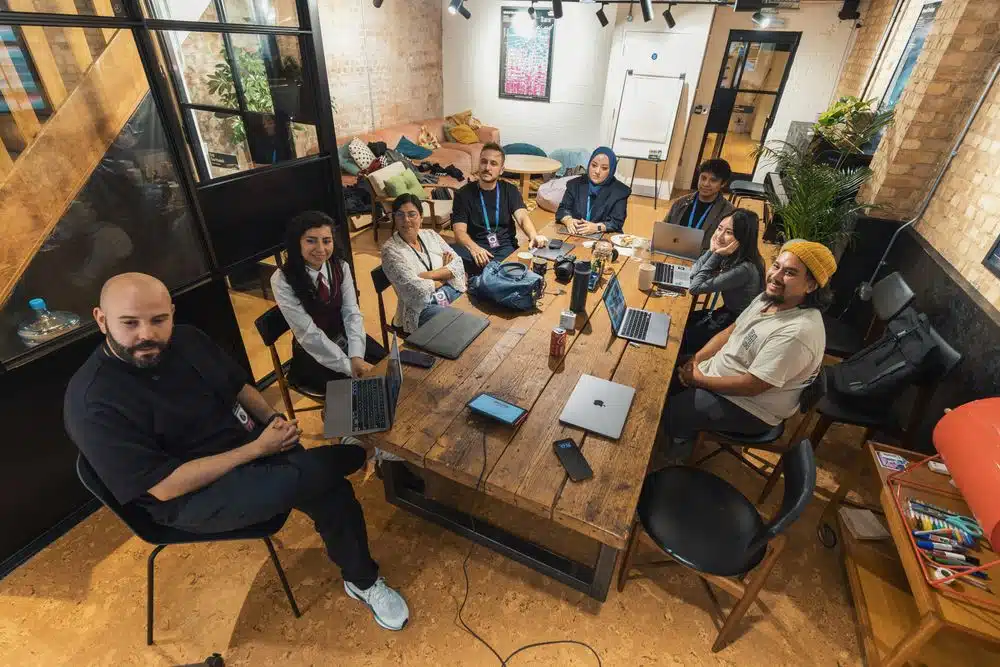
Having led SI and CRM transformation programs across multiple countries, one pattern stands out consistently: the organizations that succeed are not the ones that move fastest. They are the ones that slow down deliberately at the design stage — negotiating definitions, involving local teams, resolving political tensions before they harden — so that execution, once it starts, can move quickly across every entity at once.
I have seen the opposite fail repeatedly: programs that impose a headquarters-designed model on entities that were never consulted, only to discover eighteen months later that half the local teams quietly rebuilt their own spreadsheets around it. The lesson holds regardless of industry or geography: architecture without political buy-in from every entity is not architecture. It’s a document.
Let’s Talk
If your organization is navigating a multi-country ERP, CRM or data governance program and would value an independent perspective on the architecture and governance model, I’d be glad to discuss it.
Book a Strategy Session with Notoriti — or explore our Diagnoz® platform to run this kind of diagnostic yourself, or browse our other analyses on enterprise architecture and digital transformation in the Notoriti Knowledge Center.
References
- The Open Group — TOGAF Enterprise Architecture Framework: https://www.opengroup.org/togaf
- Microsoft Learn — Master Data Management and Enterprise Data Platforms: https://learn.microsoft.com/
- European Commission — GDPR and Cross-Border Data Governance: https://digital-strategy.ec.europa.eu/en/policies/regulatory-framework-ai